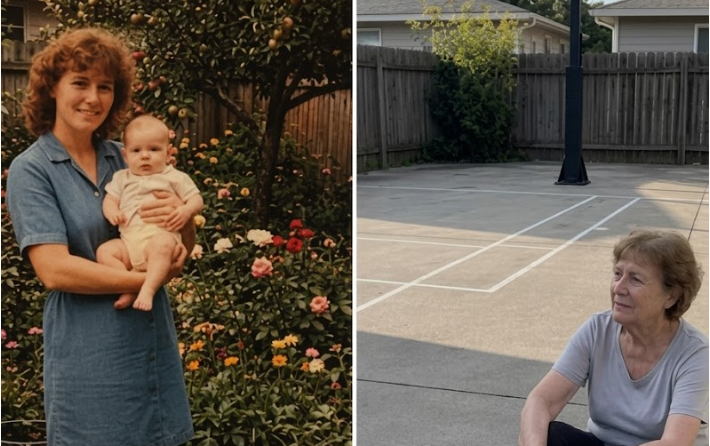
For forty years, my backyard was more than just a patch of land behind the house; it was a living chronicle of my family’s history. My late husband and I planted our first apple tree there the summer after we bought the property. Over four decades, that small plot evolved into a sanctuary of vibrant rose bushes, heirloom tomato vines, crawling green beans, and quiet walking paths shaded by mature fruit trees. Every single plant held a story—celebrating milestones, providing fresh food for Sunday dinners, and holding memories of my children playing among the flowers as toddlers.
When my husband passed away three years ago, tending to the garden became my therapy. It was where I went to feel connected to him and to find peace. So, when my son, Mark, and my daughter, Rachel, suggested that I take a two-week cruise with my sister to rest and recharge, I hesitated at first. I worried about who would water the vegetables while I was gone, but my children smiled, hugged me, and promised that they would take full responsibility for the yard. Reassured, I packed my bags and set off on vacation.
Two weeks later, my sister dropped me off at my house. Eager to check on my favorite rose bushes and harvest fresh tomatoes, I walked straight through the side gate into the backyard—and froze in absolute horror.
The garden was completely gone.
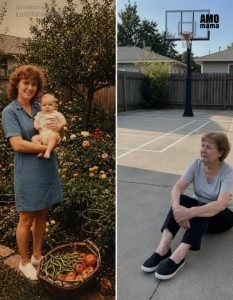
In its place stretched an enormous, sterile slab of gray concrete, extending from the back porch all the way to the wooden fence line. My forty-year-old apple tree had been chopped down to a stump. My delicate flower beds were buried under inches of stone and cement, and a giant black basketball hoop stood ominously at the far end of what was now a full-sized basketball court.
My knees buckled, and I sank onto the cold concrete, my hands trembling as I stared at the barren gray expanse. Before I could process the shock, the back door flew open, and my son and daughter walked out with proud, beaming grins, followed by my three young grandchildren holding basketballs.
“Surprise, Mom!” Mark shouted joyfully, throwing his arms out. “We noticed how much trouble you’ve been having maintaining the yard lately, so we decided to upgrade it for you! Now the grandkids have a place to play when they visit, and you don’t have to worry about pulling weeds or mowing the lawn ever again!”
I couldn’t speak. Tears streamed down my face as I looked from the giant basketball hoop down to the concrete beneath my feet, knowing that beneath that hard shell lay four decades of memories, sweat, and love.
“Mom? What’s wrong?” Rachel asked, her smile fading slightly. “We spent thousands of dollars on this while you were away. We thought you’d be thrilled!”
“Thrilled?” My voice cracked, barely louder than a whisper, as the grief morphed into quiet anger. “You destroyed forty years of my life. You didn’t do this for me—you did this for yourselves.”
A tense, uncomfortable silence fell over the yard. My children tried to justify their actions, arguing that the garden was becoming too much for a woman in her late sixties to handle and that concrete was “low-maintenance.” But no matter how they framed it, the truth was clear: they had erased my sanctuary without asking, prioritizing their own convenience and their children’s entertainment over my lifelong passion.
Without another word, I stood up, walked into the house, and locked the door behind me.
In the weeks that followed, the rift in our family grew wider. My children felt unappreciated for what they called a “generous surprise,” while I felt completely violated in my own home. Sitting alone on the edge of that cold concrete court, looking out at the giant hoop, I realized that true care for an aging parent means listening to what they value, not imposing what you think is best for them. Concrete may be low-maintenance, but it can never replace the warmth of life, memories, and roots planted with love.